



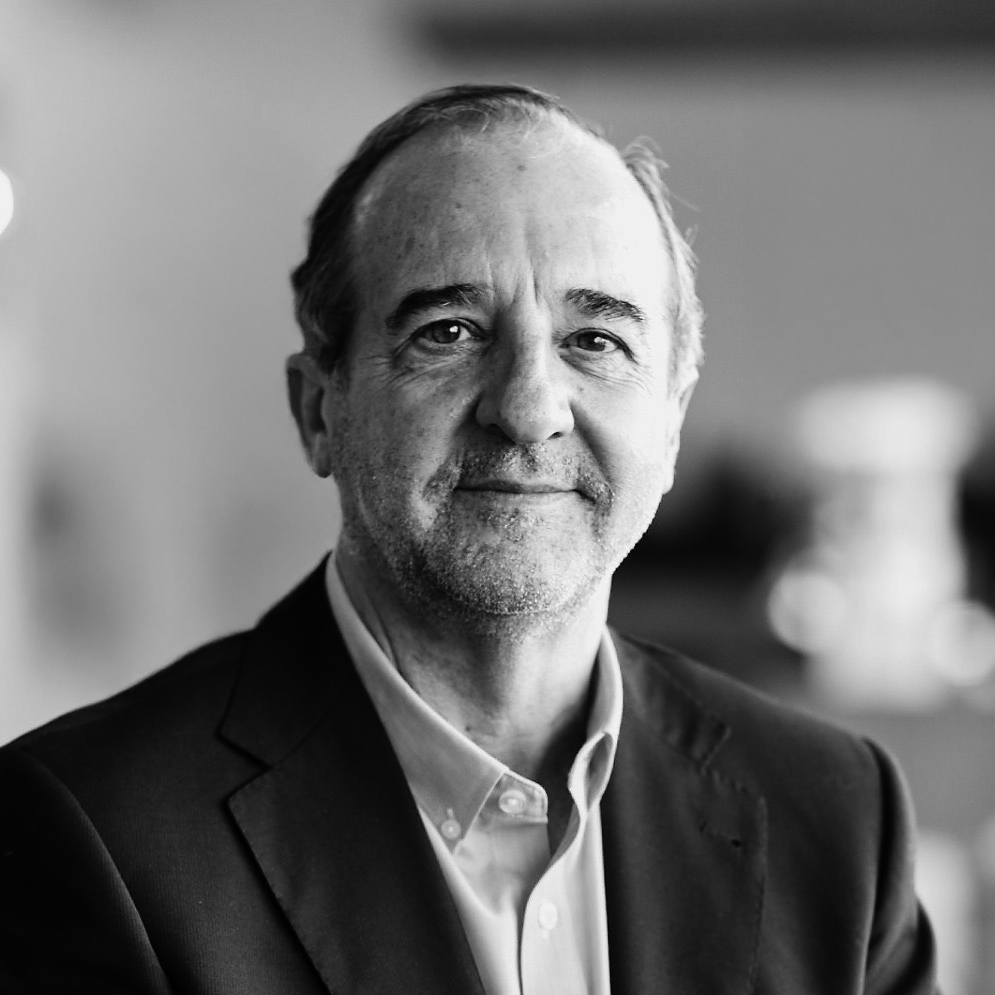
Looking back, my life is best understood through a handful of vivid memories.
I remember my childhood in Arévalo, where I used to accompany the village baker as he delivered bread on a donkey alongside my brother Pepe. Afterwards, we would return to the bakery to roast the suckling pigs that would later be served at Casa Pinilla. I believe that was when the deep respect I still have for small business owners was born, for people who put their own savings on the line, wake up before dawn every morning, and build businesses through perseverance, sacrifice, and countless hours of hard work.
That respect has stayed with me throughout my life. Even today, when I walk into a restaurant I particularly enjoy, I often end up asking to meet the owner so I can congratulate them personally. The people who know me well are already used to it and usually joke, “Give the boss a minute. He’s going to talk to the owner.” I do it because I know how difficult it is to build and sustain a small business. More often than not, running a small company requires more courage than managing a large organization surrounded by departments, resources, and support structures.
Many years later, I arrived in New York to pursue an MBA at Columbia University. Like so many students, I had very little money but an enormous desire to learn. At night, I would walk through Central Park collecting used cans to sell for a few extra dollars to supplement my scholarship. At first, I competed with the homeless for the best trash cans; later, we ended up sharing spaces, conversations, the occasional half-empty bottle, and more than a few lessons about human dignity. Those nights taught me something I have never forgotten: character is not measured by wealth, and human dignity is not defined by success.
Much of my life has unfolded somewhere between those mornings in Arévalo and those nights in Central Park. Looking back, I suspect I learned more about business between a Castilian bakery and the trash cans of Central Park than I ever did in many boardrooms.
When I returned to Spain, I was fortunate enough to join McKinsey. Those were years of learning and friendships that I still cherish today. Before long, however, I realized that I was better suited to building companies than analyzing them. I was more attracted to taking risks than studying the risks taken by others. Soon, I found myself travelling across Spain looking for entrepreneurs and businesses in which to invest.
I have been a consultant, banker, entrepreneur, and investor. I have participated in more than one hundred corporate transactions and experienced both extraordinary successes and very difficult moments. Over time, I have learned that mistakes eventually fade from memory, but the regret over opportunities one never dared to pursue remains forever.
Perhaps that is why I have always had a natural tendency to act before I theorize. I have often preferred to ask for forgiveness rather than permission. Not because I enjoy taking unnecessary risks, but because I have seen too many great opportunities disappear while others were still analyzing all the reasons why something might go wrong.
I have never been fond of endless meetings or perfect plans. My philosophy can be reduced to a very simple idea: if something makes sense, if the right people are involved, and if the risks are reasonable, let’s give it a try. We will have plenty of time to correct mistakes along the way. Most of the important things in my life have happened exactly that way.
I met my wife during my university years, probably the greatest stroke of luck in my life. Forty years later, we are still together, blessed with three wonderful children and a life shared across different cultures, countries, and experiences. As the years have gone by, I have come to realize that a person’s greatest achievements rarely appear on a balance sheet.
I have always viewed business as something more than an economic activity. Companies are, above all, made up of people. Balance sheets matter, but trust matters more. Technology changes. Markets evolve. Trends come and go. Yet some principles remain constant. One of them, which I consider fundamental, is that sustainable value is not created through speculation, but through building.
That conviction is what led me to found Gala Capital.
I never wanted to create just another investment firm. I wanted to build an organization capable of partnering with entrepreneurs, supporting long-term projects, and proving that it is possible to generate attractive returns without compromising one’s principles.

Over the years, my business philosophy has become increasingly simple and can now be summarized in just a few ideas:
- People matter more than structures.
- A handshake is worth more than any contract.
- The long term is often the greatest competitive advantage.
- No investment is worth making if it requires compromising one’s values.
People often ask me what Gala Capital’s greatest asset is. My answer is always the same: it is not our investments, our technology, or even our capital.
The answer is simple: it is people.
The professionals who have worked alongside me for decades. The entrepreneurs who lead our companies. The partners who have entrusted us with their capital and their confidence. Without talent, commitment, and reputation, no project can succeed over the long term.
Beyond my business activities, I remain personally committed to initiatives related to disability, active civil society participation, and freedom of the press. I believe that business leaders have a responsibility to help build a better society and to support those who face greater obstacles in realizing their potential.
I do not know exactly where Gala Capital will be in ten years’ time. What I do know is where I would like it to be: surrounded by good people, operating with integrity, and building projects of which we can be proud.
Because in the end, investments come and go, companies change, markets evolve, and what remains are the people with whom we share the journey.
Carlos Tejera